
Hypothyroidism Treatment in Murfreesboro, TN — Comprehensive Functional Medicine Care
At Magnolia Medical Center, we provide functional medicine care for hypothyroidism in Murfreesboro, TN, offering a thorough, whole-body approach that goes far beyond standard thyroid testing and medication management. If you have been diagnosed with hypothyroidism — or continue to feel unwell despite treatment — our team is ready to uncover what is truly happening with your thyroid and create a personalized plan to address it. Call (615) 953-9007 to schedule your evaluation.
What Is Hypothyroidism?
Hypothyroidism is a condition in which the thyroid gland — a small butterfly-shaped gland located at the base of the neck — does not produce adequate amounts of thyroid hormone. Thyroid hormones regulate metabolism, energy production, body temperature, heart rate, digestion, and nearly every other major body function. When thyroid output is insufficient, virtually every system in the body slows down.
The most common cause of hypothyroidism in the United States is Hashimoto’s thyroiditis — an autoimmune condition in which the immune system attacks the thyroid gland over time. Other causes include iodine deficiency, certain medications, radiation exposure, surgical removal of the thyroid, and pituitary dysfunction. Regardless of the cause, the resulting hormone deficiency creates a characteristic symptom pattern that can significantly affect quality of life.
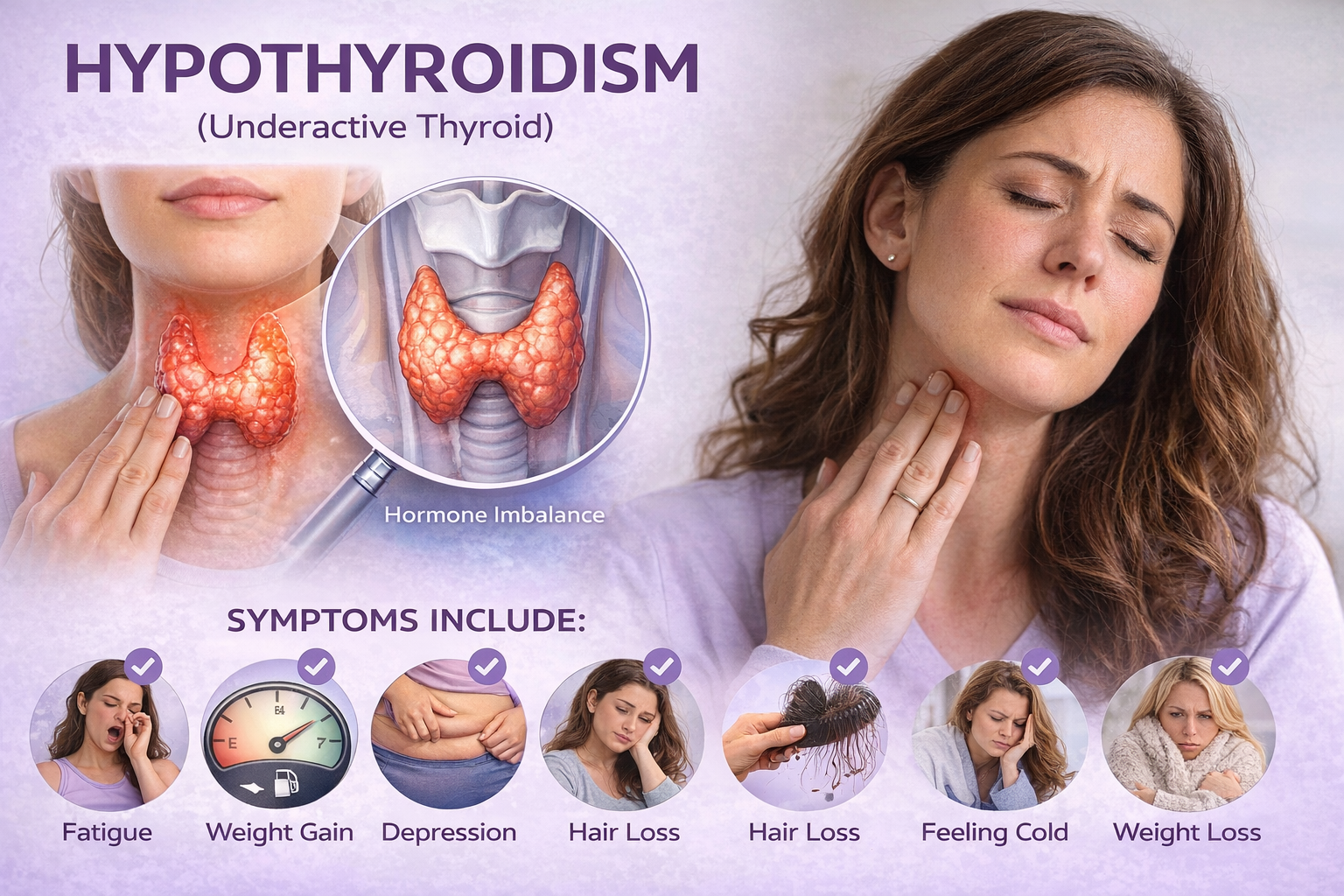
Common hypothyroidism symptoms include persistent fatigue and sluggishness, unexplained weight gain, brain fog and poor memory, depression and mood changes, cold hands and feet, dry skin and brittle hair, hair loss, constipation, slow heart rate, muscle weakness and aching, and heavy or irregular menstrual periods. At Magnolia Medical Center in Murfreesboro, Tennessee, we take hypothyroidism seriously — and we test comprehensively to understand the full scope of your thyroid dysfunction.
Why Standard Thyroid Testing Often Falls Short
The standard approach to hypothyroidism in conventional medicine is to measure TSH (thyroid-stimulating hormone) and, if elevated, prescribe levothyroxine. While this addresses the most obvious indicator of thyroid underfunction, it often misses important nuances — including whether the underlying cause is autoimmune (Hashimoto’s), whether thyroid hormone conversion from T4 to the active T3 form is impaired, whether nutrient deficiencies are limiting thyroid function, and whether adrenal or hormonal imbalances are contributing to persistent symptoms.
At Magnolia Medical Center, we conduct a comprehensive thyroid evaluation that includes TSH, free T3, free T4, reverse T3, and thyroid antibody testing (TPO-Ab and TG-Ab). This full picture allows us to identify not just the presence of hypothyroidism but the specific mechanisms underlying it — and to design a care plan that actually addresses them.
Our Functional Medicine Approach to Hypothyroidism
Your hypothyroidism care plan at Magnolia Medical Center is built around your specific test results, health history, and symptoms. Based on a comprehensive evaluation, your plan may include thyroid hormone optimization — working with or supplementing your existing medication regimen for better symptom coverage. Gut health restoration to address leaky gut and microbiome imbalance, both of which impair thyroid function and nutrient absorption. Targeted supplementation with selenium, zinc, iodine, vitamin D, and tyrosine — key nutrients required for thyroid hormone production and conversion. Adrenal support — since adrenal dysfunction and chronic stress are among the most common reasons thyroid treatment fails to resolve symptoms. Dietary protocols to reduce dietary goitrogens and identify gluten and food sensitivities that can suppress thyroid activity and drive inflammation. Hormone balancing across the full endocrine system. Our goal is for you to feel genuinely well — not just have lab values within range — and to address the root drivers of your thyroid dysfunction so that your body can maintain optimal function long-term.
Hypothyroidism FAQs
What are the most common symptoms of hypothyroidism?
Common hypothyroidism symptoms include persistent fatigue, unexplained weight gain, brain fog, depression, cold intolerance, dry skin and hair, hair loss, constipation, slow heart rate, muscle weakness, and irregular menstrual cycles. Because these symptoms overlap with many other conditions, proper comprehensive thyroid testing — not just TSH — is essential for accurate diagnosis and treatment at Magnolia Medical Center in Murfreesboro, TN.
Why do I still have symptoms even though my TSH is normal?
TSH is only one piece of the thyroid puzzle. Many patients feel unwell despite a “normal” TSH because their free T3 (the active thyroid hormone) is suboptimal, their T4 to T3 conversion is impaired, their thyroid antibodies are elevated (indicating autoimmune Hashimoto’s), or nutrient deficiencies are limiting thyroid function. At Magnolia Medical Center, we test comprehensively to identify these hidden factors and address them directly.
What is the difference between T4 and T3, and why does it matter?
The thyroid primarily produces T4, which is the inactive form of thyroid hormone. For it to have its metabolic effects, T4 must be converted to T3 — the active form — primarily in the liver and gut. Many patients on standard levothyroxine (T4 only) therapy continue to feel unwell because this conversion is impaired by stress, nutritional deficiencies, gut dysfunction, and certain medications. Measuring free T3 and reverse T3 alongside TSH gives a much more accurate picture of thyroid function.
How does Hashimoto’s relate to hypothyroidism?
Hashimoto’s thyroiditis is the most common cause of hypothyroidism in the United States. It is an autoimmune condition in which the immune system attacks and gradually destroys the thyroid gland, leading to declining hormone production over time. Many patients with hypothyroidism have underlying Hashimoto’s that is never tested for — meaning the autoimmune component is never addressed. At Magnolia Medical Center, we always test for thyroid antibodies to determine whether Hashimoto’s is the driving cause.
What nutrients are important for thyroid health?
Several key nutrients are required for thyroid hormone production and conversion, including iodine and tyrosine (the building blocks of thyroid hormone), selenium (essential for T4 to T3 conversion), zinc (supports thyroid hormone production), vitamin D (regulates immune function and thyroid activity), iron, and omega-3 fatty acids. Deficiencies in any of these can impair thyroid function even when the gland itself is structurally intact. We assess and address nutrient status as part of our comprehensive hypothyroidism care at Magnolia Medical Center.
Can stress cause or worsen hypothyroidism?
Yes. Chronic stress elevates cortisol, which directly suppresses thyroid hormone conversion and increases reverse T3 — a form of the hormone that blocks T3 receptors and contributes to hypothyroid symptoms. Adrenal dysfunction is one of the most commonly overlooked contributors to persistent hypothyroidism symptoms, even in patients who are on thyroid medication. Supporting adrenal health is a standard component of our hypothyroidism care at Magnolia Medical Center in Murfreesboro, TN.
How do I get started with hypothyroidism treatment at Magnolia Medical Center?
Call (615) 953-9007 or request an appointment online to schedule your comprehensive thyroid evaluation at Magnolia Medical Center in Murfreesboro, TN. We’ll conduct full thyroid and antibody testing, assess related systems including adrenal function and gut health, and develop a personalized care plan designed to resolve your symptoms and address the root drivers of your thyroid dysfunction.