
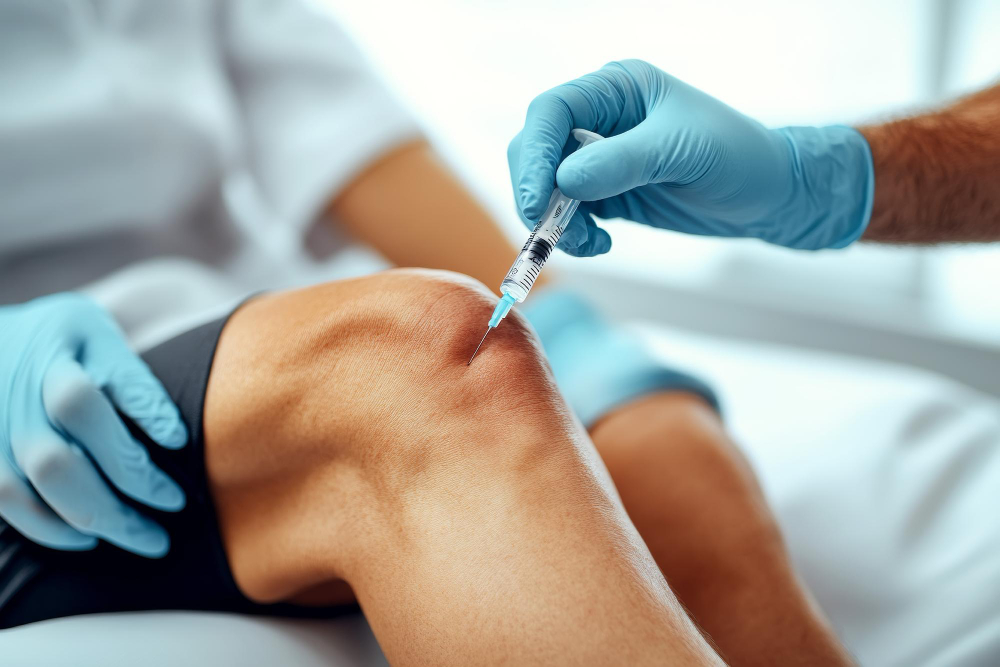
Platelet-Rich Plasma therapy — commonly known as PRP — has moved from the sports medicine pages to mainstream medical practice over the past decade, and for good reason. An expanding body of peer-reviewed research supports its effectiveness for a range of musculoskeletal conditions, particularly joint pain from osteoarthritis and soft tissue injuries. For patients who want to understand the science behind the treatment before committing to it, this post lays out what the research currently shows — and what it means for your care decisions.
What Is PRP Therapy?
PRP therapy is a regenerative treatment that uses a concentrated solution of your own platelets — the blood cells responsible for clotting and initiating wound healing — to stimulate the repair of damaged tissue. The process involves drawing a small amount of your blood, spinning it in a centrifuge to concentrate the platelet fraction, and injecting the resulting platelet-rich plasma directly into the affected joint, tendon, or other tissue.
Platelets contain hundreds of biologically active proteins called growth factors — including platelet-derived growth factor (PDGF), transforming growth factor-beta (TGF-β), vascular endothelial growth factor (VEGF), and epidermal growth factor (EGF). When injected into damaged tissue, these growth factors trigger a cascade of repair processes including new collagen synthesis, angiogenesis (new blood vessel formation), cartilage cell (chondrocyte) activation, and reduction of local inflammatory mediators.
What Does the Research Show?
The research base for PRP in musculoskeletal medicine has grown substantially, with the strongest evidence accumulated for knee osteoarthritis. A systematic review and meta-analysis published in the American Journal of Sports Medicine found that PRP injections produced significantly greater pain reduction and functional improvement compared to hyaluronic acid and corticosteroid injections in patients with knee osteoarthritis — and that these benefits were sustained at 12-month follow-up.
For rotator cuff tendinopathy, a 2021 systematic review found that PRP produced measurable improvements in pain and function compared to control interventions, with particularly strong results for chronic tendinopathy where conservative management had been insufficient. Research into PRP for lateral epicondylosis (tennis elbow), patellar tendinopathy, and plantar fasciitis similarly shows favorable outcomes compared to corticosteroid injection — which, while faster to produce initial relief, is associated with inferior long-term outcomes and potential tendon weakening with repeated use.
PRP vs. Corticosteroid Injections
This comparison is worth examining in depth because corticosteroid injections remain among the most commonly offered conventional treatments for joint and tendon pain. In the short term — within the first 4 to 8 weeks — corticosteroids often produce faster and more dramatic pain relief than PRP. However, research consistently shows that PRP produces superior outcomes at 6 and 12 months, while repeated corticosteroid injections are associated with cartilage breakdown, tendon weakening, and potential acceleration of the very degenerative process they are intended to relieve.
PRP, by contrast, works with the body’s natural biology — stimulating repair rather than suppressing inflammation — making it a more appropriate long-term strategy for conditions driven by tissue degeneration. At Magnolia Medical Center in Murfreesboro, TN, we favor this regenerative approach for knee pain, shoulder injuries, back pain, and tendon and ligament injuries.
Is PRP Right for You?
PRP therapy is most effective in patients with mild to moderate joint degeneration, chronic tendinopathy, or soft tissue injuries that have not responded adequately to conservative management. In more advanced cases of joint destruction, the regenerative capacity of PRP may be limited — which is why we also offer Wharton’s Jelly cellular therapy for more significant degenerative conditions. The right treatment for your specific situation depends on the nature and severity of your condition, which we assess thoroughly at your initial evaluation.
If you are dealing with joint pain, a sports injury, or a chronic tendon problem and want to explore non-surgical options, call Magnolia Medical Center in Murfreesboro, TN to schedule your regenerative medicine evaluation.
Frequently Asked Questions About PRP Therapy
How many PRP injections will I need?
Most patients require 1 to 3 PRP injections spaced 4 to 6 weeks apart, depending on the severity of the condition and their individual response to treatment. Some conditions — particularly those with a longer history of degeneration — may benefit from additional treatments. We assess your response after each injection and adjust the treatment plan accordingly at Magnolia Medical Center.
Is PRP therapy painful?
The injection itself produces temporary discomfort — similar to any other injection — and patients commonly experience a period of increased soreness in the treated area for 2 to 5 days following PRP as the inflammatory healing response is activated. This temporary soreness is actually a positive indicator that the regenerative process has been initiated. We use local anesthetic when appropriate to minimize procedural discomfort.
How long does it take to see results from PRP?
PRP works by stimulating tissue repair, which is a biological process that takes time. Most patients begin noticing improvement within 4 to 8 weeks of their initial injection as new collagen synthesis, angiogenesis, and tissue remodeling progress. Continued improvement typically occurs over 3 to 6 months following treatment. Unlike corticosteroids, PRP produces progressive rather than immediate relief.
Can PRP be combined with other regenerative treatments?
Yes — and combination approaches often produce the best results. At Magnolia Medical Center, we frequently combine PRP with spinal or knee decompression therapy, shockwave therapy, and PEMF to address musculoskeletal conditions from multiple angles simultaneously. When systemic factors like chronic inflammation or nutritional deficiencies are impeding tissue repair, we integrate our functional medicine program as well.


